Norwalk Ethics Board Welcomes Two New Members
Norwalk's Board of Ethics welcomed two new members and opened talks on raising its $150 annual gift cap for officials.
Other Committee 2026-09-24 Part 2 · Meeting of September 24, 2026
Norwalk's Board of Ethics welcomed two new members and opened talks on raising its $150 annual gift cap for officials. Assistant Corporation Counsel Brian Candela, staff to the board, told members the gift limit under city code section 32-8 is "something we should look at, consider, discuss and possibly amend," alongside plans to set a documented evidentiary standard for ethics hearings. Only three members, Kitty Tsang, Amy Ayala and Pat Toney, voted to approve the board's May 28 meeting minutes, since they were the only ones present then; the vote was unanimous.
Members including Denise Brown volunteered to help design a citywide ethics training program with human resources staffer Sharon Torres and the mayor's office, targeting early 2027. The Law Department reported no new ethics complaints since the last meeting, and the board, now at eight of nine seats filled, said it has no candidate yet for its vacant ninth, non-party seat.
In the full story:
- Who Was There
- Organizations And Documents Referenced
- The complete report — 1,794 words
Source: the Other Committee 2026-09-24 Part 2 meeting of September 24, 2026, reported from the official video recording and transcript.
The Full Article
Call to Order and Roll Call
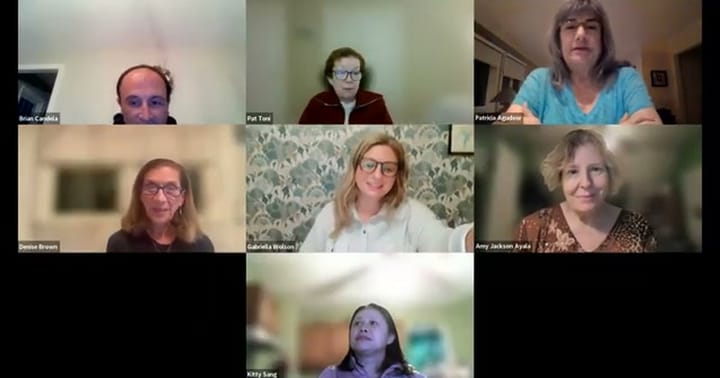
The Board of Ethics convened virtually at 7 p.m. with Assistant Corporation Counsel Brian Candela, who serves as staff to the board, opening the meeting before handing control to the chair, identified in the transcript only as "Pat," to formally call the meeting to order. Roll call identified six members in attendance: Patricia Agudo, Pat Toney, Kitty Tsang, Denise Brown, Amy Ayala and Gabriella Wilson. Candela noted the board now has eight of nine possible seats filled following a recent expansion, with six members present constituting a quorum.
Public Participation
Candela reported no members of the public were in attendance and that his office had received no advance written comment, so the board moved directly into its agenda with no public participation that evening.
New Business Taken Out of Order: Welcoming New Members
Background and stakes: The board's two newest members, Denise Brown and Gabriella Wilson, had been confirmed by the Common Council but had not yet been formally welcomed at a board meeting. The question before the body: whether to reorder the agenda so the welcome could happen before routine business. Members voted unanimously to move the new-business item (6a) ahead of the minutes-approval item, then voted unanimously again to welcome Brown and Wilson. Candela told the new members that appointment to the board requires a super-majority vote of the City Council, calling that threshold evidence of the board's significance "even though we don't get a lot of participation." He described members as "the guardians of transparency and goodwill," tasked with ensuring officials, appointees and employees act in the city's interest rather than their own. No further discussion followed; the item was procedural and ceremonial in nature.
Acceptance of Minutes (Item 4a)
Background and stakes: State and municipal procedure generally requires board minutes to be approved by members who attended the meeting in question. Only three current members, Kitty Tsang, Amy Ayala and Pat Toney, had attended the board's May 28, 2026 meeting, so only those three were eligible to vote on approving its minutes. The question before the body: whether the May 28 minutes accurately reflected that meeting's business. Candela shared his screen to display the draft minutes, explaining that an outside note-taker typically transcribes board proceedings from the recorded video for formal minutes, a process still pending for this meeting. The May 28 session, Candela said, dealt largely with code revisions that expanded the board from seven to nine members; there was no executive session or further business that day. Tsang, Ayala and Toney voted unanimously to approve the minutes as presented. No amendments were offered.
Old Business: Code of Ethics, City Code Chapter 32 (Item 5a)
Background and stakes: With two new members seated, Candela used the item as an orientation opportunity, walking through the code's structure for members unfamiliar with it. The question before the body: whether any member had questions or concerns about the code as currently written. Chapter 32 of the Norwalk City Code, covering sections 32-1 through 32-18, first took effect in November 2007 and has been amended multiple times over the ensuing 19 years, according to Candela. He noted the board expects to revisit section 32-8, covering permissible gifts, in an upcoming meeting. No member raised objections or questions on the chapter as it currently stands.
Old Business: Citizens Guide to the Code of Ethics (Item 5b)
Background and stakes: The citizens guide is a roughly 20-page plain-language companion document to the formal code, intended to walk residents or non-residents through the ethics-complaint process, including flow charts and a sample complaint form. The question before the body: whether the guide needs updating or better integration with other board materials. Member Denise Brown asked whether Candela's recent ethics presentation to the City Council incorporated material from the citizens guide. Candela said the presentation, a PowerPoint delivered section-by-section through the code, referenced the guide in only two slides, calling Brown's question "a very good point" and suggesting future seminars should add slides on the guide or attach it as an exhibit.
"Your presentation is a combination of everything," Brown said, asking whether the slides could be distributed to the full board. Candela said he would provide copies and was also working with the city's IT department to split a combined City Council video into separate segments so the ethics-specific portion could be linked from the Board of Ethics webpage.
No vote was taken; the item concluded with Candela agreeing to supply presentation materials to members.
Priorities Discussion: Gift Limits, Evidentiary Standards and Training Cadence
Background and stakes: With the board newly at full near-capacity and a recent City Council presentation behind him, Candela used the meeting to lay out an agenda for the next four to six months, stressing that the choice of priorities rested with the board, not staff. The question before the body: which of three staff-suggested priorities the board wished to pursue. Candela identified three items: reviewing the $150 annual aggregate gift limit under code section 32-8 with an eye toward possible amendment; establishing a documented evidentiary standard, whether modeled on federal, state or another framework, for hearing boards acting as a quasi-judicial, three-member panel after a finding of probable cause; and committing to annual educational seminars, ideally timed to the start of each new City Council term, as City Council Member DeJuan Wiggins had suggested during Candela's recent presentation.
"We should be doing this at the beginning of every new term for the upcoming, incoming City Council," Candela said, framing recurring training as a way to keep the code "in their mind when they're trying to do their jobs."
No motion or vote followed; Candela characterized the three items as topics for future meetings rather than immediate decisions.
HR Training Initiative
Background and stakes: Building on the training discussion, several members pushed to formalize a citywide ethics training requirement for all city employees and elected officials, not just board members. The question before the body: how to begin coordinating with the city's human resources office and mayor's office to design such a program. Candela said the board had not yet met with the city's human resources leadership, identifying Sharon Torres as the person currently filling that role after a prior department head's departure, though he did not specify her exact title. Member Denise Brown, who said she works professionally in training and development, volunteered to help, saying she was interested "particularly from like the more strategy perspective," not just individual sessions but embedding ethics training structurally into onboarding. Candela cited a prior citywide cybersecurity training mandate as precedent that a similar sign-in, tracked ethics training requirement could be implemented. He said he would email human resources and the mayor's office, copying interested members, to start the process, with a goal of holding sessions in the first two to three months of 2027, likely via video conference given members' other commitments and one member's upcoming relocation.
No vote was taken. The discussion concluded with Candela asking interested members to contact him so he could compile a working group.
Law Department Report and No New Complaints (Item 8)
Candela reported the Law Department had received no new ethics complaints since the board's last meeting. No discussion followed.
Adjournment, Board Vacancy and Panel Composition (Item 9)
Background and stakes: With no meetings planned in November or December, members raised questions about how the board would respond if a complaint arose during that gap, and about the board's continuing effort to fill its ninth, vacant seat. The question before the body: how to handle procedural gaps and finalize plans before adjourning. Candela said that if an ethics complaint were filed during the recess, the board would convene a special meeting, introduce the complaint in executive session, then vote in open session on seating a three-member investigating panel, with letters subsequently sent to the complainant and respondent naming panel members.
Asked by a member whether the board had identified a candidate for its vacant ninth seat, Candela said no candidate was yet on the radar and that he would inquire further. He then explained the reasoning behind the board's expansion from seven to nine members: investigating panels and hearing boards cannot include more than one member of the same political party, so the board was restructured to guarantee three Democrats, three Republicans and three unaffiliated or independent members, ensuring panels can always be properly constituted. Because Norwalk has no independent-party registrants beyond those already seated, members clarified the vacant seat needs to go to a non-Democrat, non-Republican candidate, whether unaffiliated or a registered third-party voter.
The board voted unanimously to adjourn.
Implications and what is next: The board does not meet again until October, and has no scheduled sessions in November or December absent a complaint. Members agreed to continue organizing the HR training initiative and the gift-limit and evidentiary-standard discussions outside of formal meetings, with an update expected at the board's next session.
Members present: Patricia Agudo, member (referred to informally as chair during the meeting); Pat Toney, member; Kitty Tsang, member; Denise Brown, member; Amy Ayala, member; Gabriella Wilson, member.
Members absent: two seated members not named in the transcript; the board's ninth seat remains vacant.
Staff: Brian Candela, Assistant Corporation Counsel, staff to the Board of Ethics.
Public commenters: none; no members of the public attended and no written comment was submitted.
Outside parties referenced but not present: Sharon Torres, identified as currently filling the city's human resources leadership role; City Council Member DeJuan Wiggins, cited for a comment made during a separate City Council ethics presentation; an unidentified presenter referred to only as "Mario," described as having co-presented with Candela to the City Council.
Norwalk Common Council / City Council — cited as the body that confirms Board of Ethics appointments by super-majority vote and that received Candela's recent ethics training presentation.
Norwalk Human Resources Department — identified via Sharon Torres as the office the board plans to partner with on a citywide ethics training rollout.
Mayor's Office — identified as a second partner, alongside human resources, in planning ethics training.
Norwalk Law Department — reported no new ethics complaints since the board's last meeting, item 8.
City Code Chapter 32, Code of Ethics (sections 32-1 through 32-18) — the board's governing ethics code, in effect since November 2007 and amended multiple times; section 32-8, covering gift limits, flagged for future review.
Citizens Guide to the Code of Ethics — a roughly 20-page plain-language companion document discussed under item 5b, including complaint flow charts and a sample complaint form.
May 28, 2026 Board of Ethics meeting minutes — approved by the three members who attended that session, item 4a.
Share this story
Know someone in Norwalk who follows town government? Share Townbrief Norwalk: they can sign up free.